
What Is a Self Check-In Hotel System? Benefits, Costs, and Real-World Use Cases
- Jan 21
- 4 min read
Updated: Feb 27
A Practical Guide for Small Hotels Operating Lean, 24/7
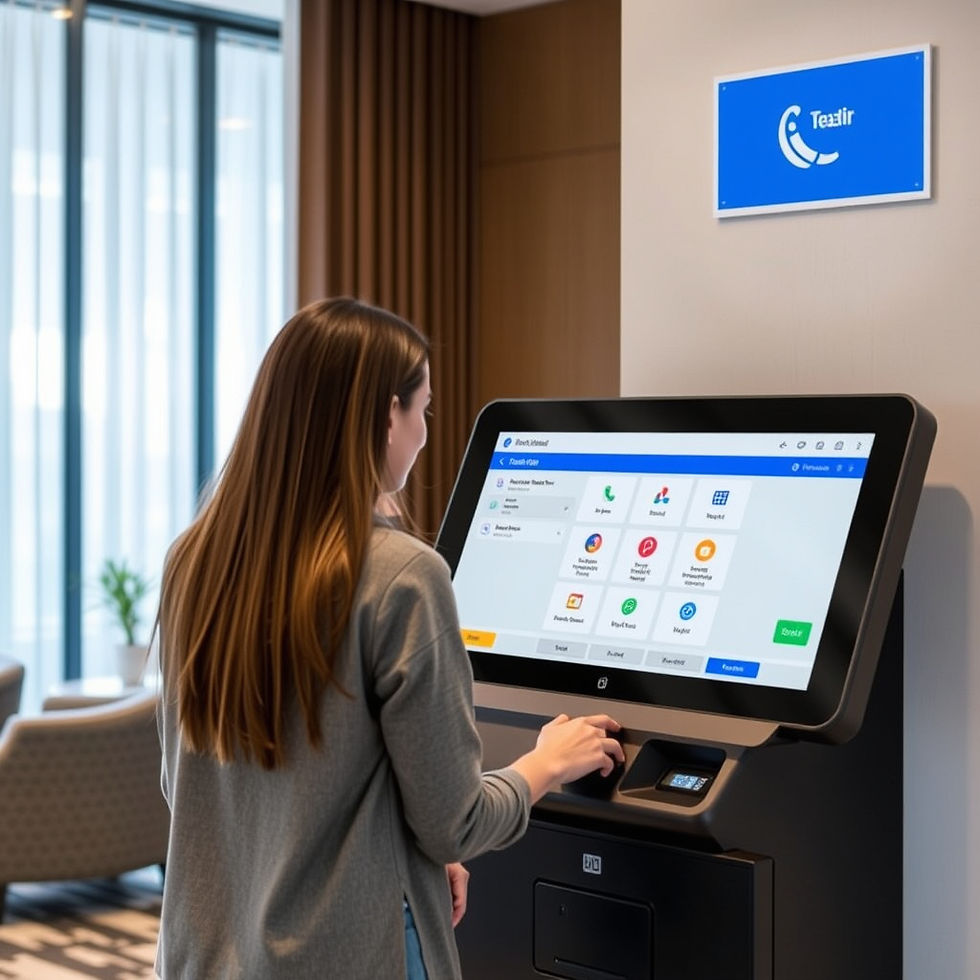
For small independent hotels, the front desk is rarely busy. But it is always costly.
Unlike large properties, most small hotels do not experience waves of arrivals or long check-in queues. Instead, check-ins are spread unevenly across the day. There may be one arrival in the morning, a few in the afternoon, and an occasional late-night guest.
Yet staffing decisions still have to cover all hours, regardless of how little activity actually occurs. This mismatch between guest activity and staffing cost is the core operational challenge small hotels face. Self check-in hotel systems exist to solve exactly this problem.
What is a Self Check-In Hotel System?
A self check-in hotel system allows guests to complete the check-in process independently using their own device, without relying on a front desk staff member to be present. Guests receive clear instructions before arrival, verify their identity digitally, complete registration, and receive room access directly on their phone.
The process is available at all times, whether staff are on-site, multitasking elsewhere, or not present at all. For hotel owners, this means check-in becomes a system-led process rather than a staff-dependent one.
Why Small Hotels Are Adopting Self Check-In
For hotels with fewer than 30 rooms, front desk manning is a fixed cost applied to highly variable demand. There are long periods when no guests arrive, followed by short moments when check-in is required. Staffing for coverage rather than activity creates inefficiency that is difficult to justify financially.
Self check-in systems allow hotels to align operational cost with actual usage. Guests can check in whenever they arrive, and staff presence is no longer required simply to “stand by.”
In practice, this often means:
Fewer staffed hours per day
Reduced need for night or standby shifts
More predictable monthly operating costs
This flexibility is the primary reason small hotels adopt self check-in - not novelty, and not automation for its own sake.
A Better Experience When Staff Aren’t Immediately Available
In many small hotels, the front desk is not continuously manned throughout the day. Especially at night, where there might not be a staff on-site at all and the employee has to take on the check-in remotely.
When guests arrive during these moments, the typical workaround is manual messaging: contacting a number, waiting for instructions, sending documents, and waiting again for confirmation and key access.
Self check-in removes this uncertainty. Guests follow a single, consistent process and receive room access immediately once verification is complete. From a guest’s perspective, this feels more reliable than waiting for responses — even during daytime hours.
Security Through Standardisation, Not Presence
A common concern among hotel owners is whether self check-in compromises security.
In reality, manual processes in small hotels are often inconsistent. Identity checks vary by staff member and time of day, and records may be incomplete or fragmented.
Modern self check-in systems standardise security across all check-ins. Features such as facial verification ensure that the person accessing the room matches their submitted identity, while digital logs create a clear record of every check-in event.
Compared to ad-hoc or manual methods, this often represents a meaningful security improvement rather than a risk.
Real-World Use Cases in Small Hotels
Small hotels use self check-in in different ways depending on their operating model.
Some properties use it during night shifts and off-peak hours, allowing guests to arrive independently when staff are not present. Others use it throughout the day to support multitasking staff who are not always stationed at the front desk. In some cases, hotels operate with no front desk staff at all, relying entirely on digital check-in and remote support.
In Singapore, Thailand, and Malaysia, these models are already in operation. What they have in common is not size or brand, but a focus on running lean operations without compromising guest confidence. Self check-in supports all of these scenarios without requiring a single, rigid approach.
The Most Common Misunderstanding
Hotel owners often hesitate for understandable reasons.
Some worry their guests won’t know how to use the system, particularly older travellers. Others question whether an unmanned front desk can be secure. And many simply find it hard to imagine a hotel operating without someone physically present.
In reality, most guests already navigate far more complex digital processes in daily life — from mobile boarding passes to food delivery apps. With clear instructions and a simple interface, adoption rates are far higher than expected.
Security is also frequently stronger than manual processes. Digital check-in creates clear audit trails, access logs, and identity verification records that are difficult to achieve consistently at a traditional front desk. Also, self check-in is often misunderstood as removing service.
In practice, it removes dependence on constant physical presence. Guests still receive instructions, communication, and support when needed — but through a system designed to work consistently, regardless of time or staffing availability. Hospitality is not reduced. It is delivered differently.
Is a Self Check-In System Right for Your Hotel?
Self check-in systems are particularly suitable for small independent hotels that experience uneven arrival patterns and want to reduce fixed operational costs. They can be used alongside staff, during specific hours, or as a fully automated solution. The system adapts to how the hotel operates, not the other way around.
Try It Without Risk
Understanding how self check-in works does not require a commitment or a lengthy sales process. Start with the free starter tier and onboard your hotel yourself. See how guests check in, how verification works, and how operations feel — at any hour of the day!
FAQ
Can self check-in work without any staff operating it?
Yes. Self check-in can operate fully independently without on-site staff, or be used selectively alongside staff during certain hours such as off-peak periods or night shifts. It is designed to adapt to how each hotel chooses to operate.
What if my guest encounters a problem during check-in?
There are two options. Hotels can review the guest check-in log to quickly identify and resolve the issue, or choose a fully hands-off approach by using a plan that includes 24/7 video support for guests, ensuring assistance is always available when needed.


Comments